
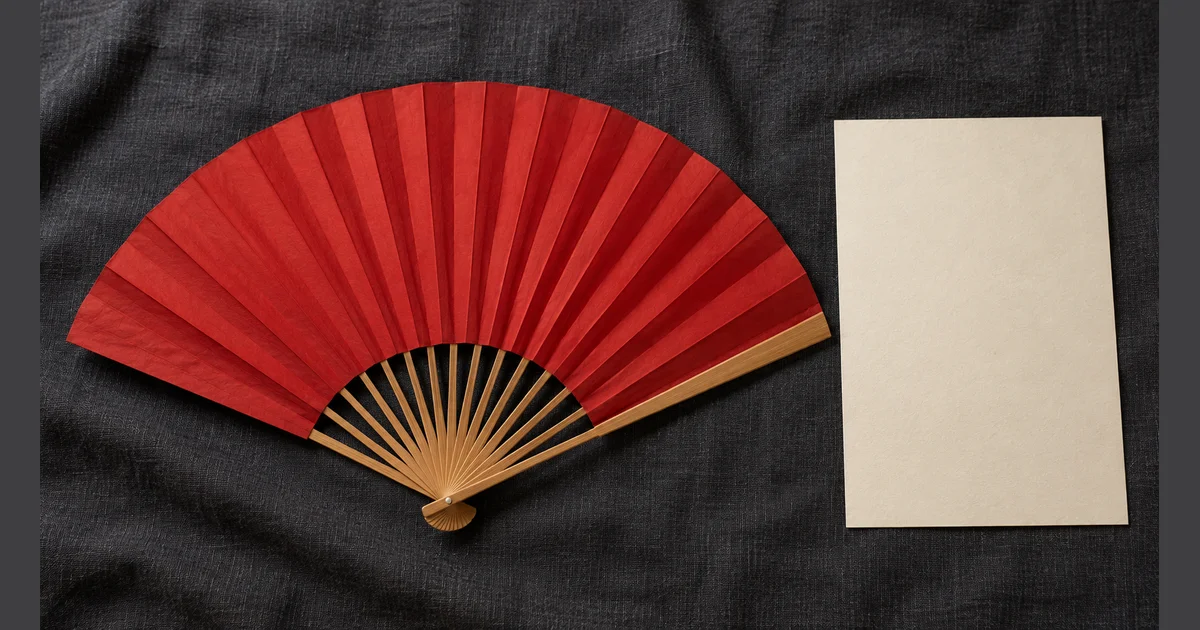
A fan-shaped painting and an album-leaf description need not contradict each other. Shape and documented presentation answer different questions; neither label alone establishes that a particular painting was once used as a handheld fan.
Shape and presentation
The Asian Art Museum describes albums as collections of similarly sized leaves, sometimes assembled from otherwise unrelated paintings. It also notes that many fans were preserved in albums or on hanging scrolls. These are general descriptions, not an individual object history. See its guide to Chinese painting formats.
The useful distinction is between a compatible description and a documented sequence: the former does not establish the latter.
Remounting and its limits
The University of Washington sourcebook separately discusses fan paintings and screen paintings. It explains that screen paintings were often remounted as hanging scrolls, warning that surviving formats may differ from earlier ones. Its painting-format discussion supplies context, not provenance for your object.
A screen example must not become a fan biography. It does not establish where a particular fan painting originated or how it was remounted.
Careful wording for an object note
Keep observation, catalogue wording and historical interpretation separate in your notes. Record the entry title beside any description you borrow, so an interpretation does not drift from one artwork to another. If the entry leaves earlier use unexplained, write not established in this entry, rather than treating that silence as proof that no information exists elsewhere.
Hypothetical wording: If an entry explicitly identifies an album leaf and the outline is visibly fan-shaped, a cautious note could read: “Fan-shaped painting, catalogued as an album leaf; earlier use not established in the entry.” This is an invented wording example, not a museum quotation. The classification and any assertion about earlier use require object-specific documentation.

